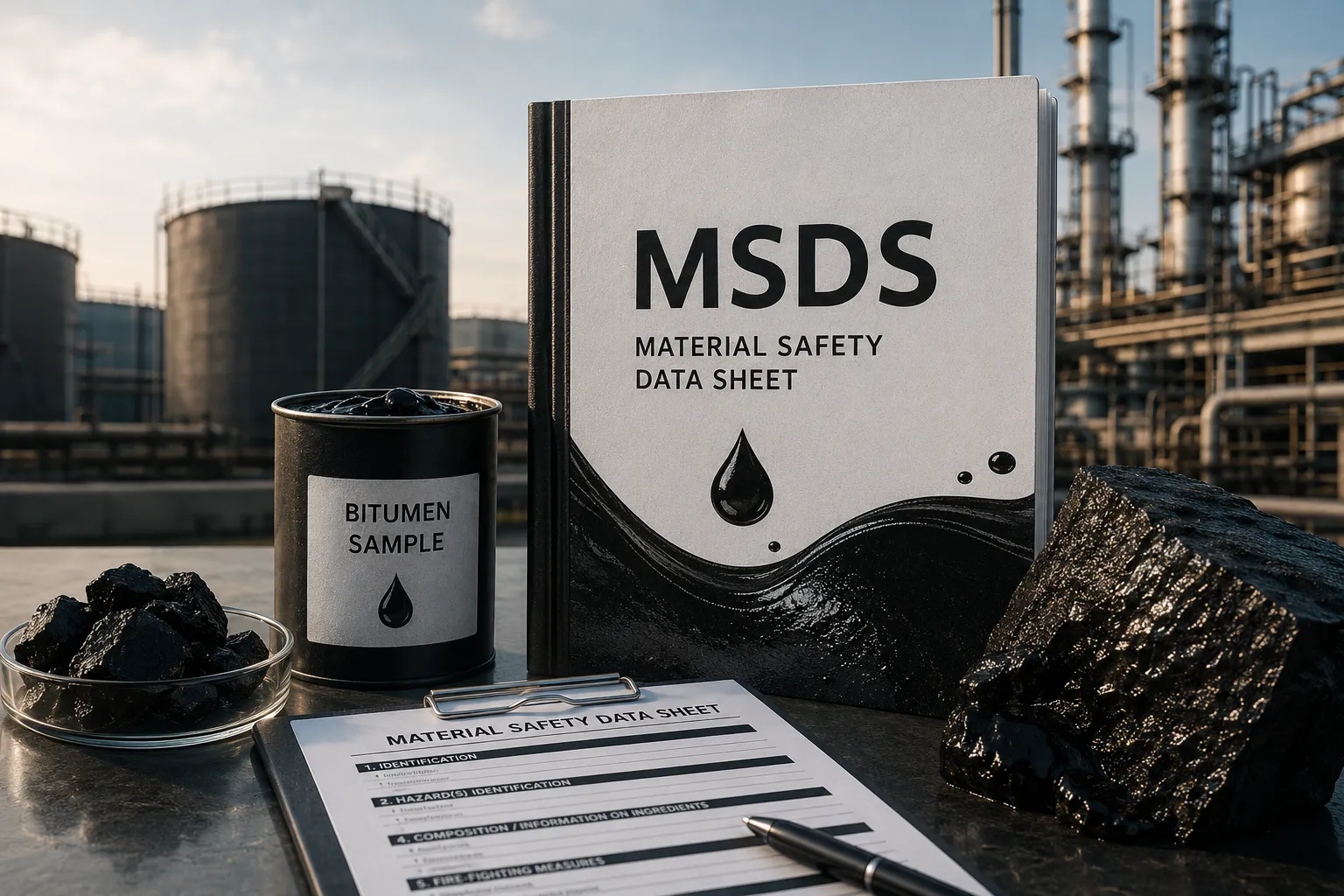
1. Identification of Substance and Supplier
Substance/Preparation: Bitumen
Bitumen Supplier: www.qatranpars.com
Email: info@qatranpars.com
Date of Revision: December 2016
2. Composition / Information on Ingredients
The product contains no hazardous substances according to EC Directive 67/548/EEC and its subsequent amendments and adaptations referenced in this publication.
3. Hazard Identification
- Inhalation of vapor or mist may cause headaches, nausea, and irritation of the nose and respiratory tract.
- Eye contact may cause slight irritation.
- Prolonged or repeated skin contact may cause mild skin irritation.
4. First Aid Measures
Eye Contact:
If the substance enters the eyes, rinse immediately with an emergency eyewash solution (if available) or clean water for at least 15 minutes. Seek medical attention.
Skin Contact:
Remove contamination using a suitable skin cleaner, then wash thoroughly with soap and water. If irritation persists, seek medical attention.
Ingestion:
If swallowed, seek immediate medical advice. Do not induce vomiting.
Inhalation:
If inhaled, move the affected person to fresh air immediately. Keep the person warm and at rest.
5. Firefighting Measures
There is no risk of fire or explosion under normal conditions, as the identified products are non-combustible. Although the product is non-flammable, exposure to fire may generate hazardous fumes. If necessary, wear suitable respiratory protection equipment.
6. Accidental Release Measures
Avoid direct skin contact and wear appropriate personal protective equipment (see Section 8).
Clean-Up Procedures:
- Eliminate all sources of heat and ignition.
- Contain leaks using absorbent materials such as sand.
- Disperse any remaining material with water or foam spray.
- Do not use a vacuum system for clean-up.
7. Storage and Handling
Storage:
Store in sealed, unopened containers. Recommended storage temperature range: 1°C to 50°C.
Handling:
Avoid prolonged skin contact and contact with the eyes. Follow standard industrial hygiene practices and ensure adequate ventilation during use.
8.Exposure Controls / Personal Protection
Respiratory Protection:
Use suitable respiratory equipment when exposed to vapors for extended periods.
Hand and Skin Protection:
Prevent skin contact by wearing protective clothing, including waterproof gloves, overalls, and safety boots. Replace heavily contaminated clothing immediately and wash before reuse.
Eye Protection:
Wear waterproof safety goggles or protective eyewear.
9. Physical and Chemical Properties
| Property | Value |
|---|
| Form | Solid |
| Color | Black |
| Odor | Characteristic |
| Specific Gravity | 1.00 |
| Solubility in Water | Dilutable |
| Alkalinity (pH) | N/A |
| Boiling Point / Range | > 250°C |
| Melting Point / Range | > 100°C |
| Flash Point | N/A |
| Flammability / Auto-Flammability | N/A |
| Oxidizing Properties | N/A |
| Vapor Pressure | N/A |
10. Stability and Reactivity
The product is stable under normal storage and operating conditions at ambient temperatures. Thermal decomposition or combustion may release carbon oxides and other toxic gases or vapors.
11. Toxicological Information
Refer to Section 10.
12. Ecological Information
No known ecotoxicological effects have been identified under normal conditions of production, handling, storage, and use.
13. Disposal Considerations
Coagulate the dispersion by gradually adding ferric chloride and lime. Remove the clear supernatant liquid and discharge it into an approved chemical sewer system. Dispose of liquid waste and contaminated solids by incineration in accordance with local, state, and federal regulations.
14. Transport Information
- Not classified as hazardous for transportation.
- No transport classification is required.
- Goods are classified as Non-Dangerous Goods (Non-DG) according to IATA regulations.